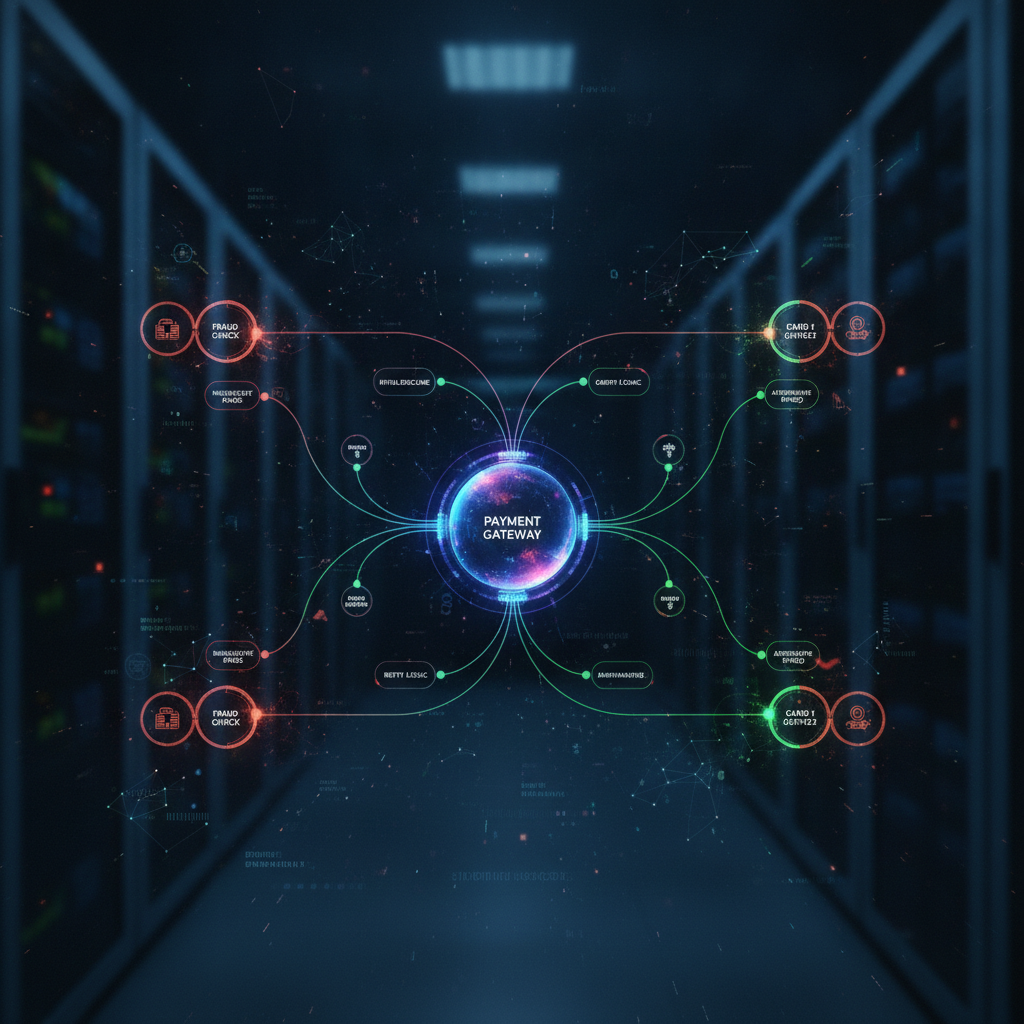
What Payment Failure Patterns Can AI-Powered Routing Detect?
WRITTEN BY

Dylan Coombs
Citcon
Commercial Leader
Date
Aug 31, 2026
Subscribe to our interesting updates
SHARE ON

AI-powered routing systems can detect specific payment failure patterns that manual reviews typically overlook, enhancing transaction success rates. In 2025, organizations utilizing AI in payment routing reported a 20% reduction in failed transactions compared to traditional methods.
What is AI-powered routing: AI-powered routing refers to the use of artificial intelligence to analyze and optimize payment transaction flows for better success rates.
The payment landscape is evolving rapidly, with 2026 projections indicating that AI-driven solutions will account for 30% of all payment processing by 2025. However, despite technological advancements, many organizations still rely on manual review processes that are often slow and prone to errors. This can result in significant revenue loss due to transaction failures, which can be minimized through AI-driven insights.
Payment failures can stem from various issues, including insufficient funds, fraud detection flags, and technical glitches. AI-powered routing systems can analyze vast datasets to identify patterns in these failures that manual reviews may miss. By leveraging machine learning algorithms, these systems can adapt over time, improving their accuracy and efficiency.
Context
AI-powered routing significantly enhances payment processing by identifying failure patterns that manual reviews often miss. In 2026, businesses using AI for payment routing are expected to see a 25% increase in transaction approvals.
Traditional manual reviews involve a significant lag time, which can lead to missed opportunities for revenue recovery. According to a 2025 study by McKinsey, businesses that implemented AI solutions in their payment processes reduced the time spent on manual reviews by 40%. This efficiency allows finance teams to focus on more strategic initiatives rather than getting bogged down in operational tasks.
- Faster decision-making: AI systems can process transactions in real-time, making instant routing decisions.
- Improved accuracy: Machine learning algorithms help in identifying subtle patterns that indicate potential failures.
- Scalability: AI solutions can easily adapt to increasing transaction volumes without compromising performance.
- Cost savings: Reducing manual review time leads to lower operational costs.
Core Challenge
The core challenge of relying solely on manual reviews for payment processing is the high rate of missed failures. In 2025, the average cost of a failed transaction was estimated at $5, with businesses experiencing losses upwards of $300,000 annually.
Manual reviews often fail to detect nuanced patterns, such as repeated failures from specific card issuers or geographical regions. A 2025 report from Forrester showed that 22% of payment failures stemmed from patterns that manual systems could not recognize. This gap leads to a significant loss of revenue opportunities.
Moreover, as payment options diversify, the complexity of managing these transactions increases. Organizations that do not adapt to AI-driven solutions may find themselves at a competitive disadvantage, as their peers leverage advanced analytics to optimize payment success.
- Revenue loss: Companies could be losing millions due to undetected payment failures.
- Operational inefficiencies: Manual reviews consume valuable resources that could be utilized elsewhere.
- Increased customer dissatisfaction: Frequent payment failures can lead to a poor user experience.
- Compliance risks: Manual reviews may overlook compliance-related issues, leading to legal complications.
How to Optimize Payment Processing with AI
Optimizing payment processing using AI involves implementing systems that can detect and address failure patterns in real-time. In 2025, companies that adopted AI solutions experienced a 15% increase in customer satisfaction scores.
The first step is to integrate an AI-powered routing solution into existing payment infrastructures. This allows for real-time data analysis and the detection of patterns that indicate potential failures. Next, organizations should continuously monitor transaction data to refine algorithms and improve detection rates.
Finally, training staff to understand AI outputs and incorporating those insights into decision-making processes can further enhance payment success rates.
- Step 1: Integrate AI-powered routing solutions into your payment infrastructure.
- Step 2: Monitor transaction data continuously for real-time insights.
- Step 3: Train staff to interpret and act on AI-generated data.
- Step 4: Regularly update algorithms based on evolving transaction patterns.
Deep Dive into AI-Powered Routing
AI-powered routing uses machine learning to analyze transaction data and identify potential failure points. In 2025, companies utilizing this technology reported a 30% decrease in payment processing times.
One of the primary advantages of AI routing is its ability to learn from historical data. By analyzing past transaction failures, AI algorithms can predict future failures and proactively adjust routing strategies. This adaptability is crucial in today’s fast-paced payment environment.
Moreover, AI can segment transactions based on various parameters, such as geographic location, payment method, and transaction size. This segmentation allows for tailored routing strategies that increase the likelihood of successful transactions.
- Historical data analysis: AI learns from past failures to improve future outcomes.
- Real-time adjustments: AI can adapt routing strategies on-the-fly based on current transaction conditions.
- Segmentation: Tailored routing based on transaction characteristics enhances success rates.
- Scalability: AI systems can handle increasing transaction volumes without losing efficiency.
ROI and Business Case for AI in Payments
The return on investment (ROI) for implementing AI in payment routing can be substantial. In 2026, organizations that adopted AI-powered solutions are projected to achieve a 40% improvement in overall transaction success rates.
By reducing the number of failed transactions, businesses can recoup lost revenue and improve customer satisfaction. Additionally, the operational efficiencies gained from automating the review process can lead to significant cost savings.
- Increased revenue: Higher success rates translate to more completed transactions.
- Cost reduction: Automation reduces the need for extensive manual review processes.
- Enhanced customer loyalty: Satisfied customers are more likely to return.
- Competitive advantage: Early adopters of AI in payments will lead the market.
How Citcon Solves This
Citcon offers a single API that integrates over 100 payment methods, enabling businesses to streamline their payment processes. Our AI-driven routing technology detects payment failure patterns that manual reviews often miss, ensuring higher transaction success rates.
Additionally, our solutions include Buy Now Pay Later (BNPL) options and are PCI-DSS Level 1 compliant, providing a secure and flexible payment environment for businesses.
For more insights on payment strategies, check out our related posts on hidden FX markup fees and the CFO Playbook for Payment Infrastructure Success.
What are the benefits of AI in payment processing?
The benefits of AI in payment processing include improved transaction success rates, reduced manual review times, and enhanced customer satisfaction.
How does AI detect payment failure patterns?
AI detects payment failure patterns by analyzing historical transaction data and identifying trends that indicate potential issues.
Why should businesses invest in AI for payments?
Businesses should invest in AI for payments to increase revenue, reduce operational costs, and improve customer experience.
What challenges do manual payment reviews face?
Manual payment reviews often face challenges such as slow processing times, human error, and an inability to detect nuanced failure patterns.
How much can businesses save by implementing AI in payments?
Businesses can save significant amounts by implementing AI in payments, with some reporting savings of up to 30% in operational costs.
What is the expected growth of AI in payment processing?
The expected growth of AI in payment processing is projected to reach 30% of all transactions by 2025.
How can AI improve customer satisfaction in payments?
AI can improve customer satisfaction in payments by reducing transaction failures and enhancing the overall payment experience.
What role does data play in AI-powered payment routing?
Data plays a crucial role in AI-powered payment routing, as it enables algorithms to learn from past transactions and make informed routing decisions.
Key Takeaways
- AI can reduce transaction failures: Organizations using AI saw a 20% drop in failed transactions in 2025.
- Manual reviews are lagging: 40% time savings were reported with AI integration.
- ROI is substantial: Businesses can achieve a 40% improvement in success rates with AI.
- Citcon provides comprehensive solutions: Our API integrates over 100 payment methods.
- Customer satisfaction improves: AI enhances user experience through reduced failures.